
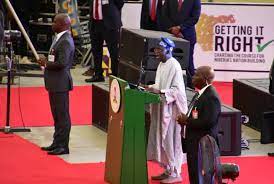
President Tinubu Unveils its ambitious 2024 budget, allocating a substantial N6.75tn out of the projected N27.5tn for key sectors, including defence and security, education, and infrastructure. The announcement was made by the Minister of Budget and National Planning, Abubakar Bagudu, during the budget breakdown presentation on Wednesday.
In the ‘Budget of Renewed Hope,’ President Tinubu Unveils emphasized completing critical infrastructure projects to address economic structural issues and reduce costs for businesses and the average Nigerian. The proposed budget, totaling N27.5tn, aims for job-rich economic growth, macroeconomic stability, enhanced human capital development, poverty reduction, and improved social security.
Defence and internal security take precedence, with an overhaul planned to enhance law enforcement capabilities and safeguard lives and investments nationwide. Tinubu highlighted the importance of human capital development, particularly for children, as the foundation of the nation’s progress.
To achieve these goals, the government expects the economy to grow by a minimum of 3.76%, despite current inflationary challenges projected to moderate to 21.4% in 2024. Key budget components include a conservative oil price benchmark of $77.96 per barrel and a daily oil production estimate of 1.78 million barrels per day. The budget breakdown comprises non-debt recurrent expenditure (N9.92tn), debt service (N8.25tn), and capital expenditure (N8.7tn).
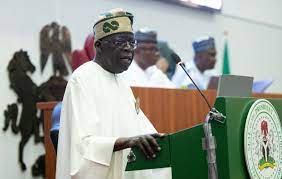
The education sector receives a significant boost with N2.18tn allocated, a 101.85% increase from the 2023 provision. Defence and security sector funding increases by 46.39% to N3.25tn, and the health sector sees a 23.15% improvement to N1.33tn. Infrastructure provision, with an emphasis on private sector involvement, accounts for N1.32tn.
Social investments and poverty reduction programs are allocated N534bn, reflecting the government’s commitment to inclusive growth. The 2024 budget anticipates generating revenue of N18.32tn, with N7.94tn from oil-related sources and N10.39tn from non-oil-related sources. Tax and fiscal policy reviews are underway to increase the revenue-to-GDP ratio from less than 10% to 18%.
The budget also addresses concerns about fiscal deficit, projecting N9.18tn (3.88% of GDP) for 2024, lower than the N13.78tn deficit in 2023. This deficit will be financed by new borrowings, privatisation proceeds, and drawdowns on multilateral and bilateral loans.
Despite the opposition’s criticism, lawmakers from various parties lauded the budget for reducing deficits and increasing capital expenditure. The budget is expected to pass between Thursday and Friday, facilitating budget defense sessions with ministries, departments, and agencies. As the government faces challenges in funding, it invites private sector partnerships to unlock the nation’s potential in line with national aspirations.
For more news visit https://arritoneconsult.com.ng/blog
For more educational post visit examhood.com.ng