

The Supreme Court Reserves Judgment in the appeals filed by Alhaji Atiku Abubakar of the Peoples Democratic Party (PDP) and Mr. Peter Obi of the Labour Party (LP) against the election of President Bola Tinubu. This significant development comes after extensive legal proceedings, where both the appellants and the respondents presented their arguments for and against the appeal.
Supreme Court Reserves Judgment Justice John Okoro, leading a seven-member panel, announced the court’s decision to reserve judgment, noting that the date for the final judgment will be communicated to the concerned parties.
At the heart of these appeals is the controversy surrounding President Tinubu’s academic records obtained from Chicago State University (CSU) in the United States. Alhaji Atiku Abubakar alleged that the President forged his CSU certificate, which he submitted to the Independent National Electoral Commission (INEC) during the presidential election held on February 25.
Atiku’s legal team argued that this matter was crucial, as it directly pertained to Tinubu’s eligibility to run for the presidency. They attempted to present fresh evidence from CSU, including depositions from the university’s registrar, affirming Tinubu’s graduation but not verifying the authenticity of the submitted certificate.
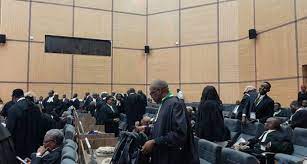
However, the court questioned the timing of introducing new evidence after the statutory 180-day period for filing, trial, and determination of election petitions had expired. They asked why the Supreme Court should disregard this constitutional provision to allow the new evidence.
The respondents, including President Tinubu’s legal team, contended that the fresh evidence should not be admitted, arguing that the CSU depositions remained dormant until the deponent testified in court. They also emphasized the strict adherence to the 180-day timeframe.
Additionally, Atiku’s appeal centered on claims of non-compliance with the Electoral Act of 2022 during the presidential election. He argued that INEC violated electoral laws and regulations, leading to an incorrect decision by the Presidential Election Petition Court.
Ultimately, the Supreme Court will decide on the validity of the fresh evidence and the allegations of non-compliance with electoral laws in the presidential election.
In a separate petition, the Supreme Court dismissed an appeal filed by the Allied Peoples Movement (APM), which sought to challenge Tinubu’s victory. The APM claimed that the Presidential Election Petition Court erroneously struck out their undefended petition. However, the Supreme Court deemed the appeal a non-issue and encouraged its withdrawal to reduce the court’s workload.
The APM’s counsel reluctantly accepted this suggestion, leading to the dismissal of the appeal.
These legal proceedings have significant implications for Nigeria’s political landscape, as the Supreme Court’s judgments will determine the validity of President Tinubu’s election and could set legal precedents for future electoral disputes in the country. The court’s decision will be eagerly awaited by the parties involved and the Nigerian public.
For more news visit https://arritoneconsult.com.ng/blog
For more educational post visit examhood.com.ng