
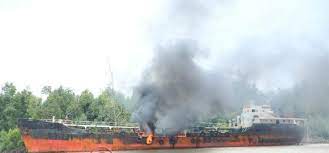
Controversy Surrounds Destruction of Oil-Theft the recent arrest and subsequent destruction of an 800,000-litre vessel involved in oil theft in the Niger Delta waters has sparked controversy and raised questions about the government’s actions. The vessel, named MT Tura II and owned by Holab Maritime Services Limited, was intercepted by a security outfit owned by former Niger Delta militant Government Ekpemupolo, popularly known as Tompolo. It was subsequently handed over to the authorities. However, Nigerians were surprised to learn that the vessel and its contents had been destroyed.
The Nigerian National Petroleum Company Limited (NNPCL) announced that it had destroyed the vessel, claiming that it was headed to Cameroon. According to the NNPCL spokesperson, Garba Muhammad, the vessel was intercepted with the captain and crew members on board. The crude oil cargo found on board was illegally sourced from an offshore well jacket in Ondo State. Investigations revealed that the vessel had been operating covertly for the past 12 years. There were no valid documents for the vessel or the crude oil cargo at the time of the arrest. The NNPCL’s command and control center further revealed that the vessel had been operating in stealth mode since July 2011, with its last reported location being Tin Can Port. The destruction of the vessel was intended as a deterrent to oil thieves, according to Muhammad.
While it is commendable that a private security outfit like Tantita Security Services Ltd proved faithful to its mandate in the Niger Delta region, concerns have been raised about the subsequent actions taken by the NNPCL. The destruction of the vessel without a court judgment has left many Nigerians with the impression that the government may be hiding something. Questions have been raised about the role of the NNPCL and the military authorities in acting as both accuser and judge in the matter. Additionally, the environmental pollution caused by the vessel’s destruction has also been criticized. Instead of destroying such vessels, why not forfeit them to the government when intercepted? If the vessel had been involved in oil theft for such a long time, why was it not impounded earlier?
This development raises fundamental questions about the government’s actions and the propriety of summarily destroying ships. The impression given is that the vessel was burned along with the stolen petroleum, despite the fact that the oil belongs to the country and the ship could have been impounded.
Controversy Surrounds Destruction of Oil-Theft the purpose and rationale behind the summary destruction of oil-theft vessels, leading to the loss of both stolen oil and the vessel itself, is questionable. Moreover, since the owners of the ship are known to the government, efforts should be made to hold them accountable for their acts of economic sabotage. The issue of the vessel operating in stealth mode for 12 years raises concerns about those responsible for curbing oil theft and their effectiveness in fulfilling their constitutional mandates.
The government owes the public a clear and convincing explanation for its actions and why it deemed them appropriate in the given circumstances. Until such an explanation is provided, doubts will continue to surround this controversial episode. Transparency and accountability are essential in ensuring public trust and confidence in the government’s efforts to combat oil theft and protect national resources.
for more news visit https://arritoneconsult.com.ng/blog/wp-admin
for more educational post visit examhood.com.ng