
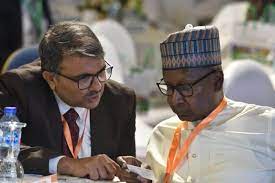
In the midst of a fuel crisis that has plagued Nigeria, Mele Kyari, the Managing Director of the Nigerian National Petroleum Corporation (NNPC) Limited, delivered a significant announcement. He revealed that Nigeria Aims is to set transition from being a petroleum products importer to an exporter by the year 2024.
Kyari made this declaration during the opening of the Petroleum and Natural Gas Senior Staff Association of Nigeria (PENGASSAN) Energy and Labour Summit 2023 in Abuja, with the theme Nigeria Aims “Petroleum Downstream Deregulation and Gas Utilization.”
Explaining the shift, Kyari emphasized that market forces are currently taking center stage in the industry, with the government playing its part in ensuring essential palliatives are available. He stated, “I strongly believe that in 2024, this country will become a net exporter of petroleum products. The meaning of this is that we will have sufficient volume in the country, and then we will have a delta that can leave our country, and that is where value is created.”
However, this transition is contingent on the nation’s successful adoption of gas as a transportation fuel. Kyari stressed that everyone must support this endeavor, highlighting the progress already made, such as the conversion of buses to run on Compressed Natural Gas (CNG) and investments in CNG infrastructure.

Kyari also discussed the importance of building the necessary infrastructure to deliver gas to the domestic market, including the OB3 river crossing project, which will facilitate gas supply from the eastern to western corridors.
On the topic of local refining, Kyari clarified that while it offers numerous advantages, including wealth creation and employment opportunities, it does not directly affect fuel prices, as they are primarily determined by international market rates.
Moreover, Kyari noted that the NNPC would have faced financial difficulties if President Bola Tinubu had not removed fuel subsidies in May.
Additionally, Kyari addressed rumors of petroleum product shortages, stating that there was no fuel subsidy and that the government was not subsidizing anyone or group for importing petroleum products into the country. He attributed the low queues in some states to transportation issues due to bad roads, which led to supply diversions.
Kyari assured the public that there is an ample supply of petrol, with over 1.4 billion liters available for consumption both on land and at sea. He explained that market forces are at play, with marketers competing to satisfy their customers’ demands.
He also acknowledged that some fuel stations reduced their prices, attracting customers and causing minor panic, but reassured that there was no cause for alarm. Kyari highlighted the government’s efforts to stabilize the foreign exchange market and expressed optimism that the foreign exchange market would reach an equilibrium position in the near future, ensuring stable prices for petroleum products and other commodities.
For more news visit https://arritoneconsult.com.ng/blog
For more educational post visit examhood.com.ng