
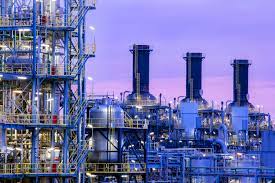
In recent developments in Nigeria’s downstream oil sector, the nation’s paradoxical situation of abundant resources juxtaposed with economic challenges has come to the forefront. While the Nigerian National Petroleum Company Limited has pledged to supply six million barrels of crude to the Dangote Refinery by December, five smaller domestic refineries are facing setbacks in their production commencement. These issues have contributed to soaring pump prices for refined products, exacerbating the difficulties faced by the Nigerian population. As these challenges persist, there is a growing call for President Bola Tinubu to initiate a program aimed at achieving domestic self-sufficiency in oil refining.
Government officials, including the Minister of State for Petroleum, Heineken Lokpobiri, have acknowledged that the inability of the NNPC to provide crude feedstock to the Dangote Refinery and five modular refineries has hindered their full operation. The blame has been placed on lower-than-expected crude production, leading to a disruption in the supply chain.
The Crude Oil Refinery Owners Association of Nigeria has expressed concerns over the numerous refineries nearing completion but unable to commence operations due to uncertainties in crude supply.
Meanwhile, the surge in pump prices has raised alarm among business operators and caused further distress for the Nigerian populace. Manufacturers have pointed to the increased cost of diesel, with prices reaching N1,275 per liter in Lagos and N1,300 ex-Lagos, as a significant factor affecting production costs and consumer prices.
The delay in the supply of crude to local refiners has left many questioning the NNPC’s role. The NNPC must clarify whether it continues to allocate 445,000 barrels of crude per day for its own use, potentially for importation of refined petrol, and whether it has ceased the controversial crude-for-refined products arrangement, as previously ordered by Tinubu.
Some analysts suggest that the NNPC should set aside the 445,000 barrels per day for local refiners to ensure a stable feedstock supply. The puzzling shift from consistent self-supply by NNPC to struggling to provide private refiners with crude, despite reported reduced production, warrants further scrutiny.
President Bola Tinubu, who holds the petroleum portfolio like his predecessors, must address this impasse urgently. The solution to Nigeria’s downstream oil sector challenges is not a mystery; achieving self-sufficiency in refining is the key.
Nigeria, despite having over 37 billion barrels in crude oil reserves, remains Africa’s largest importer of refined petroleum products. The nation’s four state-owned refineries have been non-operational for over three decades, incurring massive losses through questionable turnaround maintenance contracts. Rather than embracing the logical option of selling them, Nigeria continues to frustrate private local refining initiatives.

In 2021, Nigeria spent $11.3 billion on importing refined products, making it the 18th largest importer globally and Africa’s top importer. This figure surged to $23.3 billion in 2022, as reported by Al Jazeera.
When compared to other OPEC member states, Nigeria’s refining capacity lags significantly. Algeria refines 677,000 barrels per day, Iraq boasts over 15 refineries with a combined capacity of 1.0 million barrels per day, and Iran’s 2.64 million barrels per day capacity represents a substantial portion of the Middle East’s total output. Libya processes 634,000 barrels per day, while non-OPEC member Egypt, with a crude production of just 660,000 barrels per day, manages to refine 833,000 barrels per day, some of which are exported.
Nigeria’s best course of action is to implement a national emergency program focused on domestic refining, with the private sector leading the charge. State-owned refineries should be promptly sold, and the NNPC should completely withdraw from downstream operations to rectify the nation’s refining industry and end the cycle of dependency on imported petroleum products.
For more news visit https://arritoneconsult.com.ng/blog
For more educational post visit examhood.com.ng