
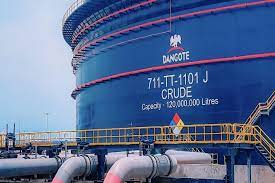
In a significant development, the first consignment of crude hit Historic Milestone feedstock has reached Dangote’s colossal $19 billion refinery, marking a pivotal moment in the commencement of fuel production at the long-awaited facility. Market sources and tanker tracking data, as reported by SP Global, confirm that the OTIS tanker transported a substantial 950,000 barrel cargo of Agbami crude, which was successfully discharged at the refinery’s terminal on Thursday.
This Historic Milestone underscores the impending operational launch of the privately owned refinery, which attained official completion in May. Delays in oil product commencement were attributed to the absence of domestic crude feedstock. However, the recent arrival of the Agbami crude, facilitated by the Nigerian National Petroleum Company (NNPC)-chartered Suezmax tanker, signals the initiation of operations at the massive plant.
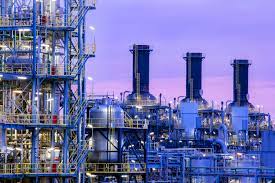
The NNPC, holding a 20% stake in the refinery, has taken proactive steps to support the startup by agreeing to supply 6 million barrels of crude oil as feedstock in December. Chevron-operated Agbami, a key player in Nigeria’s deepwater sector, serves as the primary source for Dangote’s initial crude supplies. Known for producing light sweet crude with distinct properties, Agbami is expected to contribute significantly to the refinery’s output, particularly in naphtha and kerosene production.
To facilitate further crude shipments, NNPC Logistics and Property Company (NNPCL) has chartered additional tankers scheduled to transport offshore crude from various fields to the refinery later this month. The refinery’s startup, initially unveiled in 2013, experienced repeated delays despite the installation of key units in 2019. The crude distillation unit, designed to process 12 crudes simultaneously, is engineered to handle three Nigerian crude grades—Escravos, Bonny Light, and Forcados.
Upon achieving full operational capacity, Dangote Refinery is projected to produce 327,000 barrels per day (b/d) of gasoline, 244,000 b/d of gasoil/diesel, 56,000 b/d of jet fuel/kerosene, and an annual output of 290,000 metric tons of propane/LPG. This development holds immense significance for the Nigerian energy landscape, representing a crucial step towards enhanced domestic refining capabilities and reduced reliance on imported petroleum products.
For more news visit https://arritoneconsult.com.ng/blog
For more educational post visit examhood.com.ng